Free practice
Roundabouts, without the guesswork
Turn the model, pick an exit, and watch the lane you should be in. The traffic already on the roundabout is there too, because that is the part a diagram leaves out.
STEP BY STEP
Choose a lane early, give way to the right and signal the exit at the right time.
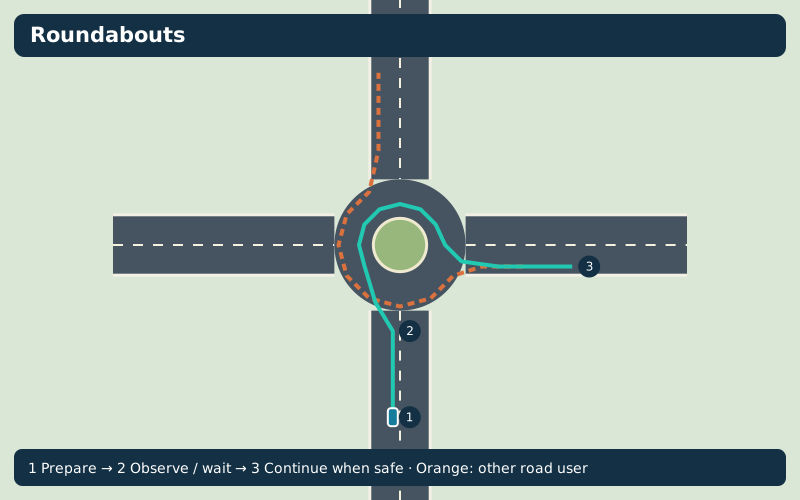
- 1A guided 3D junctions exercise. Choose a lane early, give way to the right and signal the exit at the right time.
- 2Read signs and lane arrows, then give way to the right
- 3As you pass the exit before yours
The three things examiners actually mark
Choosing the lane before you arrive
Lane choice is made on the approach, not at the give-way line. If you are still deciding at the line you will either stop when you did not need to, or commit to a lane that does not go where you are going. Read the road markings early — on most roundabouts they tell you outright.
Giving way to the right, but not stopping needlessly
You give way to traffic coming from your immediate right. You do not have to stop if it is genuinely clear, and stopping at an empty roundabout is marked as undue hesitation. Keep rolling, keep looking right, and go when there is a gap you would accept as a passenger.
Signalling on the way out
Signal left as you pass the exit before the one you want. Too early and the driver waiting at that exit pulls out in front of you; too late and nobody knows what you are doing. On a mini-roundabout it all happens in a few seconds, which is why people forget it entirely.
Practise them for real
A model shows you the line. Doing it in traffic, with an instructor telling you what they can see that you cannot, is what makes it automatic.